The Young Entrepreneurs of ASYV
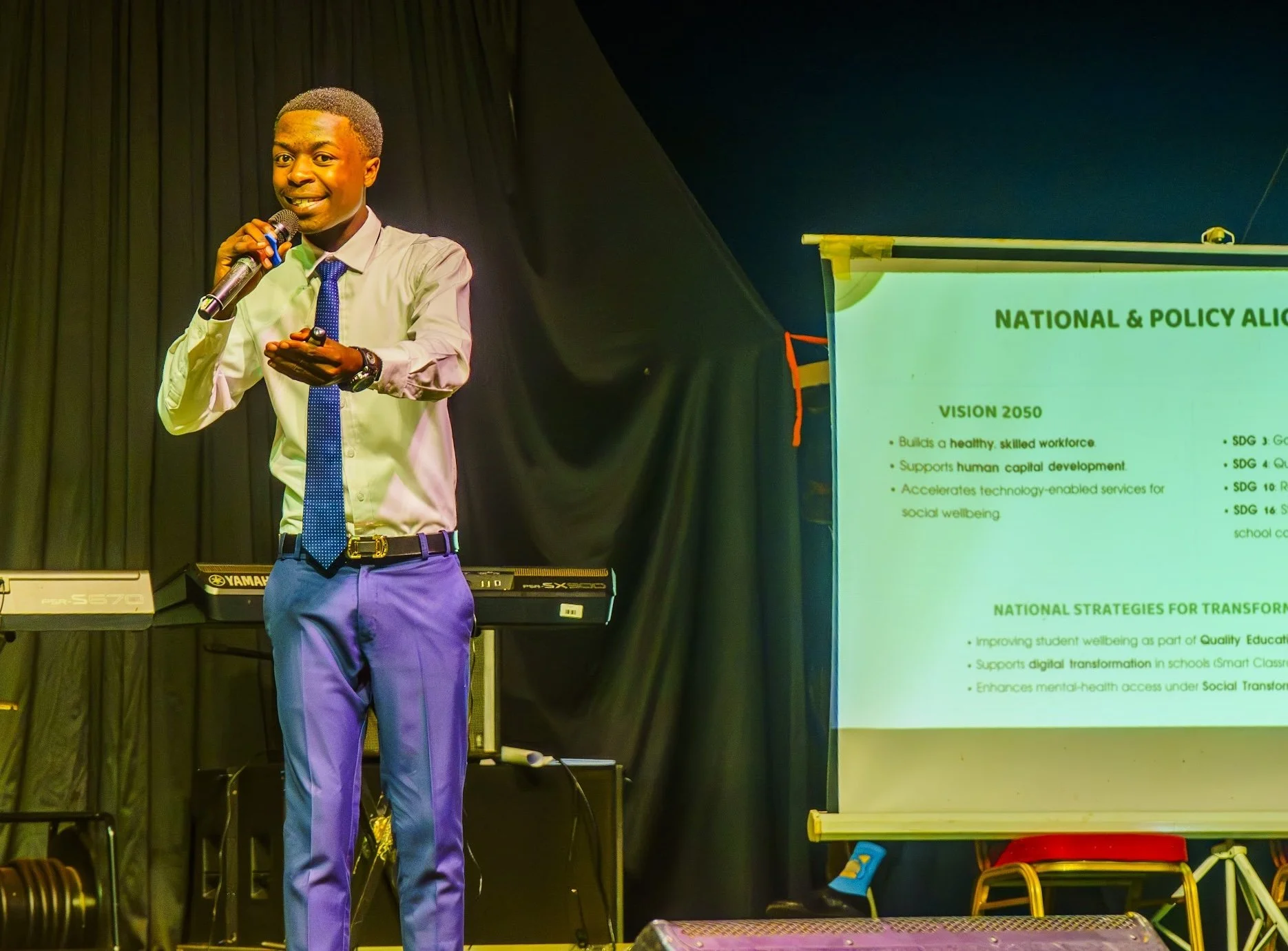
Fourth-year student Joseph Musabyimana presents Gwiza, his team's entry in the 2026 ASYV Business Plan Competition.
When fourth-year student Pascal Niyomukiza first arrived at the Agahozo-Shalom Youth Village (ASYV), he had to work hard to improve his English-language skills. “I struggled to study economics in particular, because it uses sophisticated language,” he says. Pascal knew that he was far from alone. Across Rwanda, many students leave secondary school without the English skills needed to access Rwandan universities or a growing number of employment opportunities. But at ASYV, Pascal discovered he could do something to help students like himself overcome this hurdle and thrive.
Through ASYV’s Entrepreneurship Program, our students learn how to turn classroom lessons into businesses able to solve the most pressing problems Rwandans face. Pascal worked with his student team to design Nyigisha, a tutoring app that aims to provide low-income students with the learning tools they need to excel. The team’s business plan won third place in ASYV's 2026 Business Plan Competition, making them—along with the first- and second-place teams—eligible for a small business start-up loan from the Village.
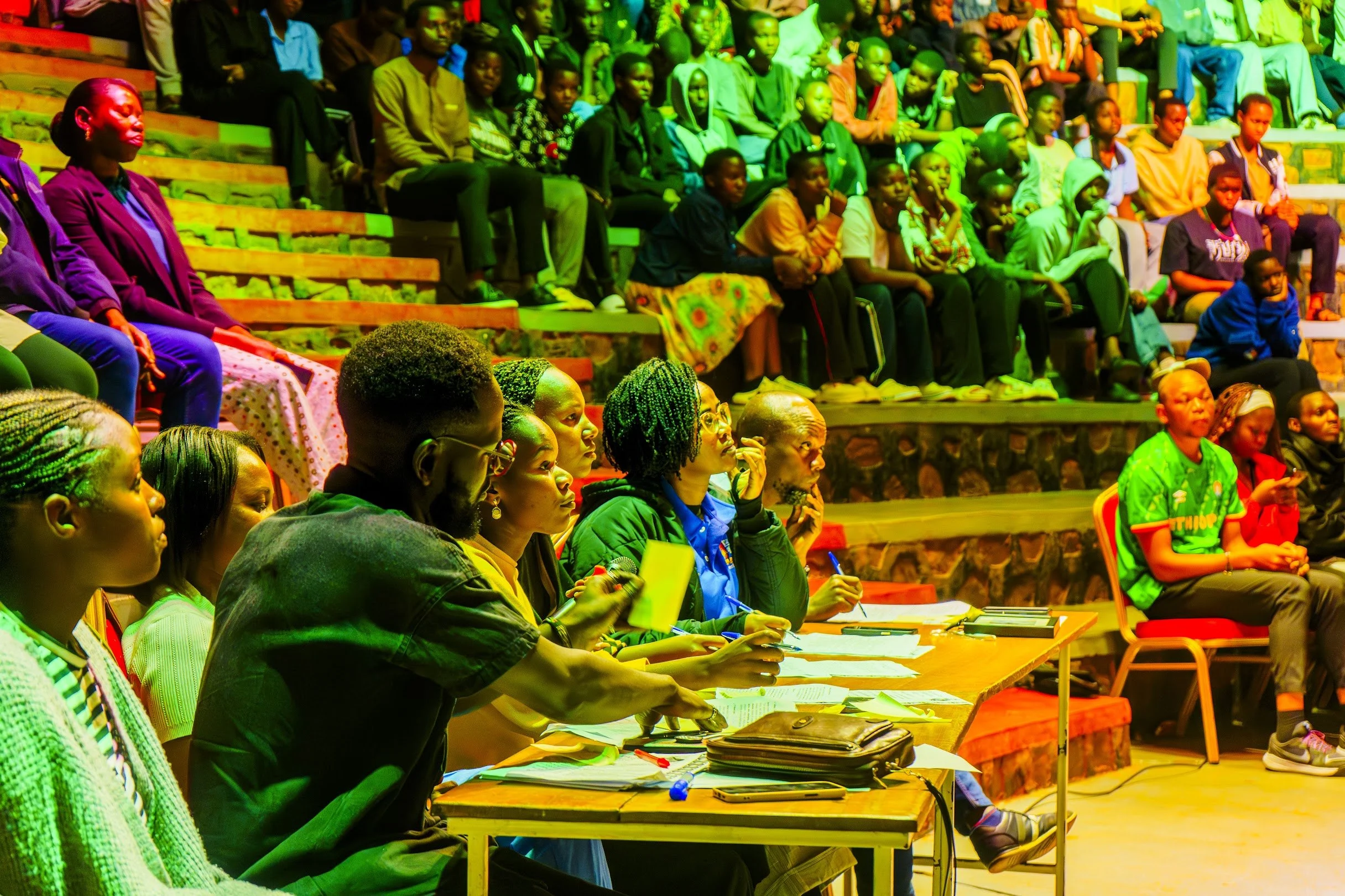
A panel of leading professionals evaluated the competition entries.
During terms one and two, each fourth-year student works with a team to develop a business plan. They receive feedback and guidance from teachers—and one another. After rigorous development, each group gets the opportunity to pitch their innovative idea. Six teams are selected to compete for the top three spots.
This year, the finalists participated in a three-day entrepreneurial boot camp hosted by professionals from the African Leadership Academy. Then they stood before a panel of successful Rwandan professionals—such as Dorcas Kamau, Director of International Affairs and Partnerships at the University of Kigali—and our Village community to make their pitch.
The judges awarded second place to Lexi Go, a smart glasses business with a twist. The student team designed their product to assist people with visual impairment by providing obstacle detection and reading support. “We have the goal of bringing independence and productivity to our users,” said team member Mukwaya Aldrine Jeremiah.
The grand prize was claimed by Gwiza, a mental health app the team designed to meet the specific needs of Rwandan students. “There is a lot of stigma around mental health,” said Agahire Ketia. “And as high school students, we face a lot of issues with depression, anxiety, academic pressure, family expectations, and others. But for many, there is no one to talk to. It was breathtaking and amazing for our project to win.”
The competition may be over, but these young innovators are just beginning their entrepreneurial journey. “After graduation, we will start the implementation of Gwiza in different schools,” says Ketia. These students are not just imagining a better future—they’re building it.
Alumni Spotlight
A Science Center Role Model
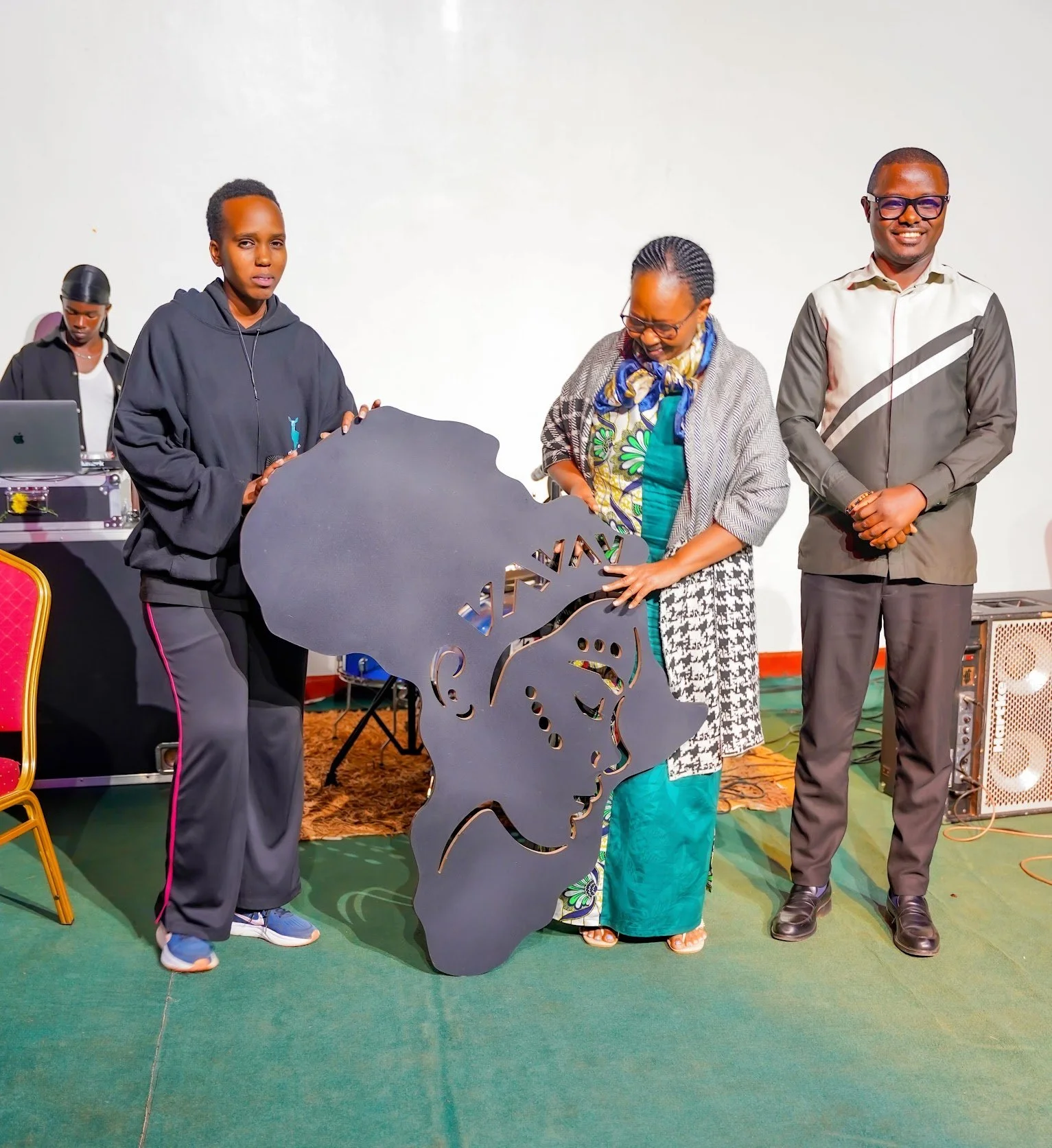
Kevine Kirezi, ASYV Class of 2025, (left) poses with a 2D model she created in ASYV's Gelfand Family Science Center.
Each school year, approximately 10 recent ASYV graduates return to the Village for a one-year internship. These graduates fill professional roles in areas from media to career resources, gaining real world skills and work experience. They also mentor current students. Unlike other staff, our graduates have stood where our young people do now, and can provide a unique form of guidance. This school year, our alumni interns include Kevine Kirezi, a member of the ASYV Class of 2025 and our current intern at the Gelfand Family Science Center. We sat down with Kevine to discuss her work sharing her passion for science with our current students.
When did you first discover your interest in science?
ASYV introduced me to science. When I visited the Science Center, I could discover many different things. An educator would support and advise me. And in the Science Center, there are many machines and materials you can build on the science lessons you learn in school.
One day, they were forming a 3D modeling class in the center. Most of the students in the class were in their fourth year, and I was in my first, but I joined. It was fun, even though it was hard. But then most of the girls dropped out, because science was viewed as being for boys. With the help of my educators and mentors from older grades, I stayed. I ended up loving it.
When did you start mentoring other girls in science?
When I was in my third year, I talked to my teachers and started a new class in the Science Center only for girls. I had 17 girls in my class who I was mentoring. I wanted to continue that after I graduated, and now I am the first Science Center intern who is a girl. I am changing the image of who science is for.
I’ve started a 3D modeling class for girls. 3D modeling is about designing, and there are many careers in Rwanda for someone who can design. My favorite thing about this class is that I now have so many girls who are able to help each other. They can find the solutions on their own without waiting for other people to help them.
Do you know what you want to do after your internship?
Yes, I want to focus on education. I want to bring the knowledge and teaching strategies I learned at ASYV to other schools in Rwanda.